advertisement
Mastering Currency Strength Meter for Profitable Forex Trading: A Comprehensive Guide
Forex trading is fundamentally about predicting currency movements to achieve profitable deals. Within the array of tools at a trader's disposal, the Currency Strength Meter is a standout, playing a pivotal role in gauging the comparative strength of currencies, which is essential for selecting the most promising currency pairs for trading.
The Currency Strength Meter provides visual insights into currency fluctuations, aiding traders in deciphering market trends. This piece offers a detailed tutorial on leveraging the Currency Strength Meter to enhance your Forex trading strategy.
Grasp the Currency Strength Meter
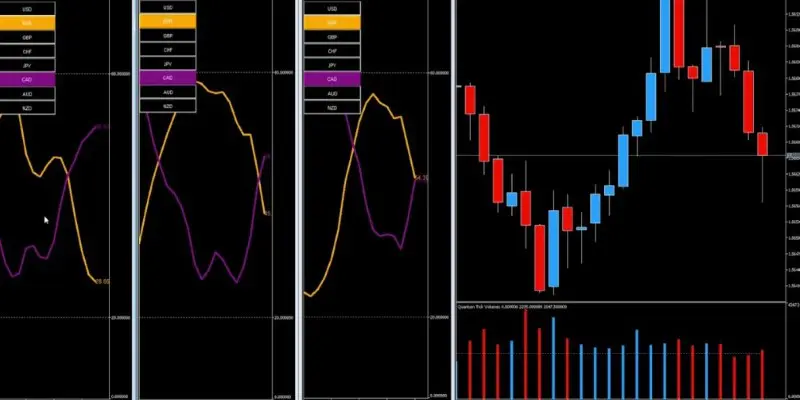
The Currency Strength Meter is a technical analysis tool that quantifies the strength of currencies in the Forex market. It aggregates real-time exchange rate data across various currency pairs and presents it in a clear and understandable format, often employing graphs or numerical scales.
This tool categorizes currencies from the most robust to the least, allowing traders to pinpoint potential trades based on prevailing market conditions. It is particularly beneficial for both novice and seasoned Forex traders, especially those engaged in rapid trading tactics such as day trading or scalping.
Functionality of the Currency Strength Meter
The Currency Strength Meter assesses a currency's performance across different pairs and calculates its relative strength. It gathers real-time exchange rate data from an assortment of currency pairs (e.g., EUR/USD or GBP/USD) and evaluates how each currency fares against others. The tool uses algorithms to process this data, sometimes considering factors like volatility or trading volume for a more precise evaluation. The result is typically displayed as a chart or numerical ranking, indicating which currencies are gaining or losing strength.
Traders can adjust the time frame to suit their trading preferences, whether they are short-term scalpers or long-term investors. Some advanced meters may even incorporate directional indicators to signal whether a currency is increasing or decreasing in strength, providing additional insights into potential market trends. While valuable, it is advisable to use the currency strength meter alongside other tools for a holistic market analysis.
Incorporate the Currency Strength Meter into Your Trading
Armed with your currency strength meter, here are the steps to effectively incorporate it into your trading strategy:
Determine Strong and Weak Currencies
The primary function of the currency strength meter is to assist traders in identifying the strongest and weakest currencies. Traders generally aim to pair a strong currency with a weak one to maximize profit potential. For example, if the meter indicates that the USD is strong and the JPY is weak, a trader might opt to buy the USD/JPY pair, expecting that the USD will appreciate against the JPY.
Validate Trends
While the currency strength meter highlights currency strength, it is crucial to verify trends with additional technical indicators. After identifying a strong or weak currency, traders can employ tools like the Relative Strength Index (RSI), Moving Averages, or Bollinger Bands to confirm the trend and ensure the meter's readings are in line with market behavior.
Prevent Counterproductive Trades
Currency strength meters are advantageous for managing portfolio risk. If a trader holds multiple positions, the meter can help avoid placing trades that negate each other. For instance, if you're long on the USD/EUR and short on the USD/JPY, you might inadvertently be betting both for and against the USD. By recognizing correlations between pairs, you can prevent taking opposing positions that nullify your profits.
Hedging Strategies
Traders can also utilize the currency strength meter for hedging purposes. If you anticipate a currency's value might decline, you can open a position in a currency pair with a negative correlation to safeguard against losses. For example, if you're concerned that your long position on the GBP/USD may depreciate, you might hedge by taking a position on USD/JPY, where the dollar could strengthen if the pound weakens.
Scalping and Swift Trades
For short-term traders, the currency strength meter can be an invaluable asset for scalping. By focusing on currencies displaying rapid fluctuations in strength, traders can execute quick trades to capitalize on fleeting market movements. However
advertisement